This is one of the most common questions we get from architects, structural engineers and property developers in Sri Lanka. Both crystalline and cementitious waterproofing are proven systems — but they work in completely different ways, and using the wrong one for your application is one of the most common and expensive mistakes in construction waterproofing.
After 15 years and 500+ projects across Sri Lanka — government hospitals, luxury residential towers, bridges, flyovers and commercial complexes — we've applied both systems extensively. This guide explains the difference clearly, without jargon, so you can make the right specification decision for your building.
How Each System Works — The Fundamental Difference
Understanding these two systems starts with one key distinction: crystalline waterproofing works from the inside, and cementitious waterproofing works on the surface.
When you apply a crystalline system, the active chemicals penetrate deep into the concrete matrix. They react with moisture and unhydrated cement particles to form insoluble crystals inside the concrete pores and micro-cracks. These crystals physically block the pathways that water uses to move through concrete. The concrete itself becomes the waterproof element.
Cementitious waterproofing works differently. You mix the powder and liquid components, apply the slurry to the concrete surface by brush or trowel, and it cures to form a continuous membrane bonded to the surface. The membrane is the waterproof element — not the concrete itself.
💡 One sentence summary: Crystalline waterproofing turns your concrete into the waterproofing barrier. Cementitious waterproofing adds a new barrier on top of your concrete.
Crystalline Waterproofing — What You Need to Know
How it works
Crystalline systems contain Portland cement, very fine treated silica sand, and a proprietary blend of active chemicals. When applied to damp concrete, the active chemicals dissolve and migrate into the concrete via capillary action. They react with calcium hydroxide and moisture present in the concrete to form calcium silicate hydrate crystals — the same type of crystals that give concrete its strength.
These crystals grow inside the concrete pores, permanently blocking them. The process continues as long as water and unhydrated cement are present. This is what makes crystalline systems self-healing — if a new micro-crack forms years later, the latent chemicals in the concrete react with moisture again and seal the crack automatically.
Key properties
- Becomes part of the concrete — it cannot delaminate, peel or be damaged by foot traffic
- Self-healing — active chemicals remain dormant in the concrete and reactivate when new cracks or moisture appear
- Can be applied to negative side — works from the inside face even when water pressure is coming from outside
- Resistant to hydrostatic pressure — can withstand significant water pressure from below or from the sides
- No surface maintenance required — once the crystals form, no topping coat or inspection is needed
- Breathable — allows vapour transmission while blocking liquid water
Limitations
- Requires a concrete or cementitious substrate — does not work on brick, block or non-cementitious surfaces without a render coat
- Not flexible — cannot bridge wide cracks or accommodate structural movement
- Requires damp concrete for activation — cannot be applied to very dry or fully carbonated concrete without surface preparation
- Higher initial cost than basic cementitious systems
Cementitious Waterproofing — What You Need to Know
How it works
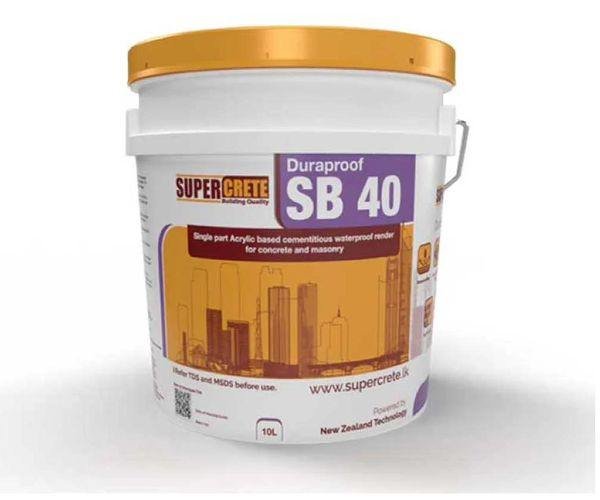
Cementitious waterproofing comes in two main types: rigid (single component, cement-based) and flexible (two-component, polymer-modified). For most Sri Lanka applications, flexible cementitious systems are specified because the polymer component gives the cured membrane elasticity — allowing it to bridge hairline cracks and accommodate the small movement that occurs in all buildings due to thermal cycling, moisture changes and structural loading.
The two components — a dry powder and a liquid polymer — are mixed on site to a slurry consistency and applied by brush, roller or trowel in two coats. The system cures to form a continuous, seamless membrane bonded to the concrete surface. The polymer component provides elongation, meaning the membrane can stretch slightly without cracking when the underlying concrete moves.
Key properties
- Flexible — bridges hairline cracks up to 0.5mm, accommodates structural movement and thermal cycling
- Compatible with most substrates — works on concrete, masonry, brick, block and rendered surfaces
- Positive and negative side application — can be applied to either face of a structure
- Can be tiled over — compatible with tile adhesives, suitable as an under-tile waterproofing membrane
- Lower initial cost — typically less expensive per square foot than crystalline systems
- Well-established application method — applied by brush and roller, training requirement is lower than injection systems
Limitations
- Surface membrane — if damaged by construction activity before protection is applied, the waterproofing is compromised
- Not self-healing — if new cracks form wider than the system's elongation capacity, water can penetrate
- Requires surface protection during construction — cannot be walked on without a screed or protection board
- Limited hydrostatic pressure resistance compared to crystalline systems
Side-by-Side Comparison
| Crystalline (Duraseal XP) | Cementitious Flexible (Duraflex Ultra) | |
|---|---|---|
| How it works | Penetrates concrete, forms crystals inside pores | Applied as surface coating, cures to flexible membrane |
| Self-healing | ✅ Yes — reactivates when new cracks form | ❌ No — membrane must be intact |
| Flexibility | Rigid — cannot bridge movement | Flexible — bridges hairline cracks, accommodates movement |
| Substrate | Concrete and cementitious only | Concrete, masonry, brick, render |
| Hydrostatic pressure | Very high resistance | Moderate resistance |
| Negative side application | ✅ Yes | Limited |
| Tiling over | With skim coat | ✅ Yes — directly tileable |
| Application method | Brush, spray or dry-shake | Brush, roller or trowel |
| Typical cost (applied) | Rs. 500–750/sqft | Rs. 350–600/sqft |
| Lifespan | Life of the structure | 10–20 years (exposure dependent) |
| Maintenance | None required | Inspection recommended every 10 years |
| Best for | Structural concrete, tunnels, foundations, tanks | Roofs, bathrooms, balconies, pools |
Which System for Which Application
- Foundations and raft slabs — where hydrostatic water pressure from soil is the primary concern
- Underground car parks and basements — where structural integrity is critical and access for maintenance is limited
- Tunnels and culverts — where negative-side application is necessary and self-healing is essential
- Water tanks and reservoirs — including potable water tanks (certified food-safe)
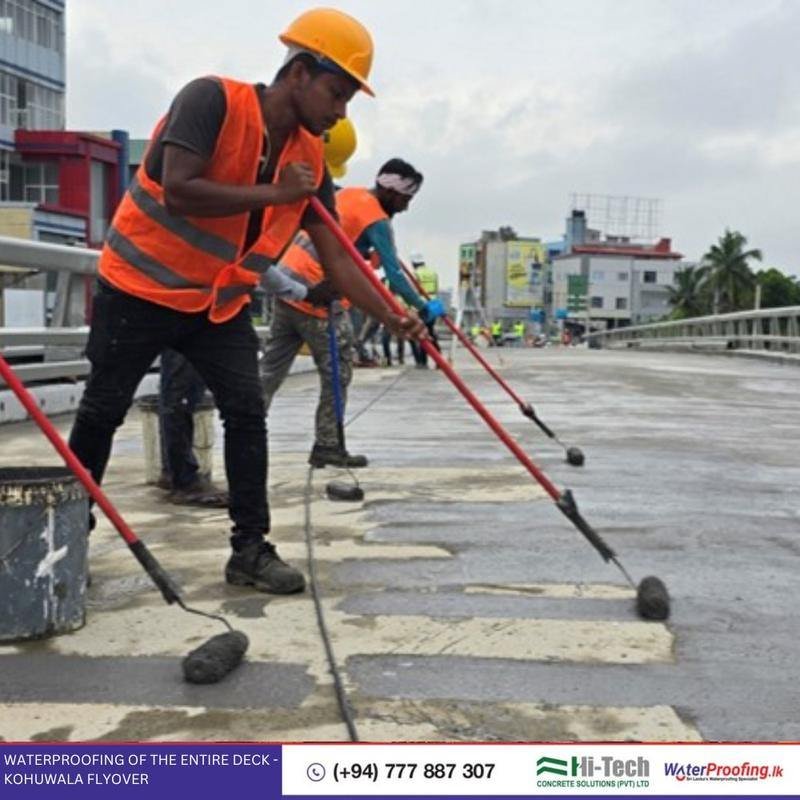
- Bridge decks and flyover structures — where the system must withstand structural movement, dynamic loading and water pressure simultaneously
- Construction joints and penetrations — as a first-layer treatment before other systems are applied
- Any structure where you cannot get back for maintenance
- Bathroom and wet room waterproofing — under tiles, on walls, shower areas
- Flat roof and slab waterproofing — exposed or under screed and paving
- Balconies and terraces — where thermal movement causes regular expansion and contraction
- Swimming pools — as the surface coat over a crystalline primer coat
- Podium decks — under landscaping, paving or insulation
- Existing buildings — where surface repair and waterproofing is required on compromised or mixed substrates
- Any application where tiling or finishing will go directly on top
Real Sri Lanka Projects — Which System We Used and Why
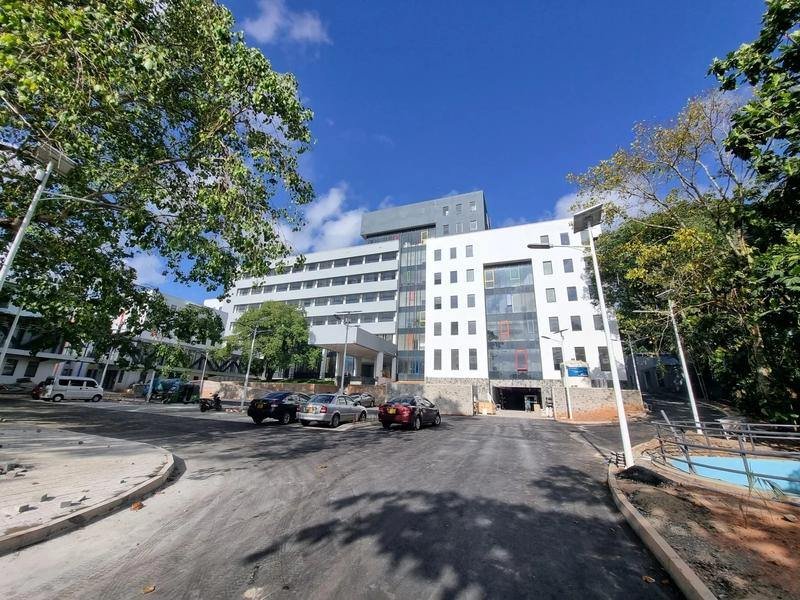
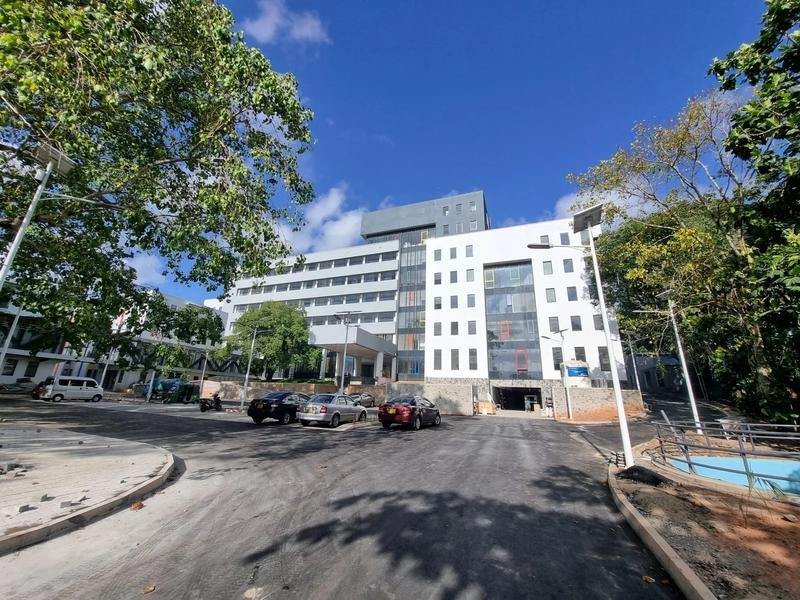
Maternity & Children's Hospital, Kalutara
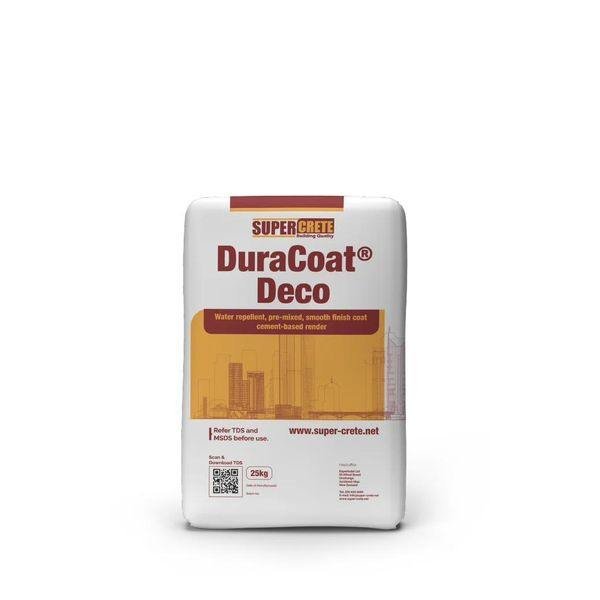
System used: Combination — Supercrete Duraseal XP (crystalline) for structural concrete, water tanks and drainage channels. Supercrete Duraflex Ultra (flexible cementitious) for wet areas, bathrooms and roof slabs.
Why: A healthcare facility has zero tolerance for water ingress. Any dampness in a clinical environment is an infection control failure. We specified crystalline for all structural elements because it becomes permanently part of the concrete — no maintenance required, no possibility of delamination. Flexible cementitious was used in wet areas because it is directly tileable and bridges the minor movements that occur in finished bathroom walls and floors.
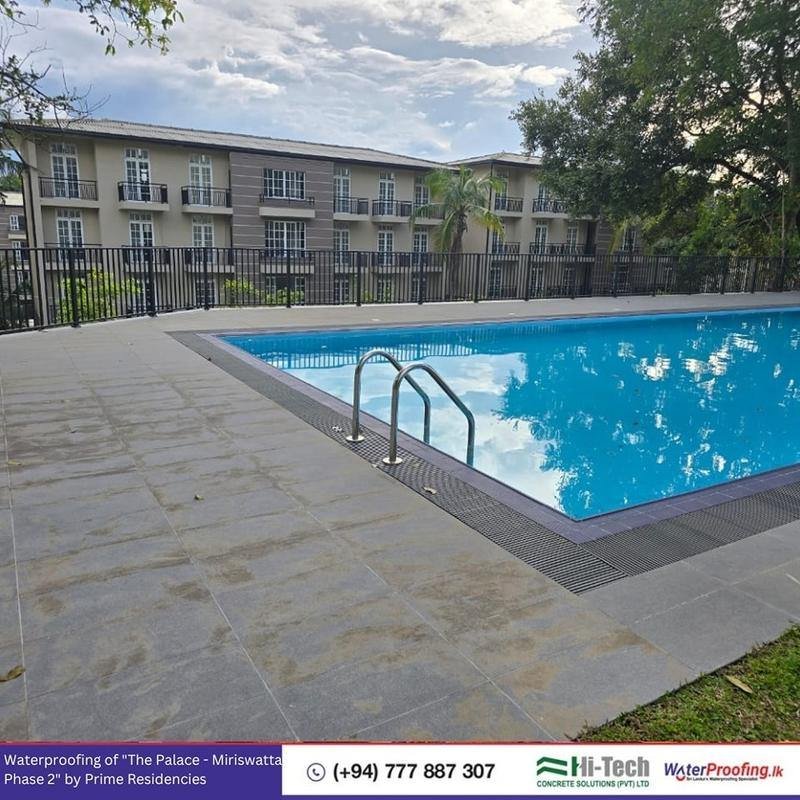
The Palace — Miriswatta Phase 2, Prime Residencies
System used: Duraseal XP crystalline for the pool shell structural concrete. Duraflex Ultra flexible cementitious for pool walls and floor surface coat. Duraflex Ultra also used for all apartment bathrooms and roof slabs across all blocks.
Why: A luxury residential development has demanding waterproofing requirements because any failure creates liability between floors and units. The swimming pool required crystalline on the structural shell for permanent chemical resistance to pool water and chlorine. The apartments required flexible cementitious because the system needed to be applied in sequence with the construction programme and covered with tiles directly.
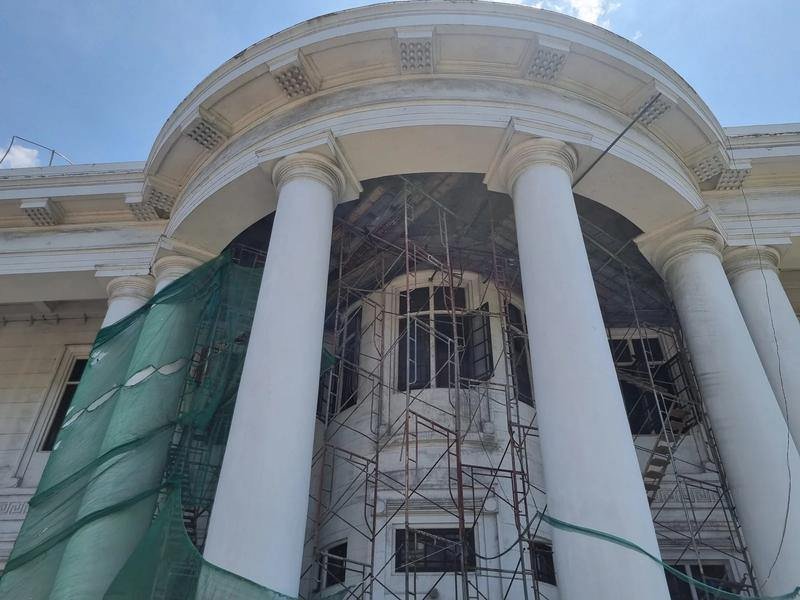
Colombo Municipal Council Building (Heritage Restoration)
System used: Supercrete Duraseal XP crystalline, applied to the original colonial-era concrete structure.
Why: A heritage building presents a specific challenge — you cannot add significant thickness to the surface without altering the historic appearance. Crystalline waterproofing was the correct specification because it penetrates into the existing concrete with minimal surface build-up. The self-healing property is particularly valuable on an old structure where minor cracking will continue to occur due to age and movement.
Can You Use Both Systems Together?
Yes — and for many large commercial, healthcare and infrastructure projects in Sri Lanka, using both is the correct specification. The two systems are entirely compatible and complement each other well.
A typical dual-system specification for a basement or podium structure would look like this:
- Crystalline first — Duraseal XP applied to the structural concrete elements, construction joints and penetrations. This gives you permanent self-healing protection within the concrete structure itself.
- Flexible cementitious over the top — Duraflex Ultra applied as a second layer on the slab surface and walls. This provides the flexible membrane that bridges surface cracks and is compatible with screed, tiling or insulation layers that follow.
This dual approach is particularly common on swimming pools, podium car parks, basement structures and healthcare facilities. You get the penetrating, permanent properties of crystalline combined with the flexible, tileable properties of cementitious — the best of both systems.
⚠️ One thing to get right: Application sequence matters. Apply crystalline first on the concrete, allow it to activate, then apply the flexible cementitious top coat. Reversing the order reduces the effectiveness of the crystalline system. Always confirm the application sequence with a certified applicator before work starts.
How to Specify the Right System for Your Project
If you are a developer, architect, QS or project manager putting together a waterproofing specification in Sri Lanka, here is a practical approach:
- Start with the substrate — is it structural concrete? Masonry? Mixed? This determines which systems are compatible.
- Identify the water pressure — is water pressing from outside (positive side) or inside (negative side)? High hydrostatic pressure situations require crystalline.
- Consider movement — will the surface experience thermal cycling, structural movement or vibration? Flexible cementitious is required for these applications.
- Think about access — will the waterproofed element be accessible for future maintenance? If not, crystalline's self-healing properties are worth the additional cost.
- Check the finish requirement — is tiling going directly on top? Flexible cementitious is the straightforward specification. Crystalline requires a skim coat before tiling.
For any project of significance, get a certified specialist to do a free site assessment. The cost of specifying the wrong system — in repair bills, delays and liability — is always far greater than the cost of getting professional advice upfront.
Frequently Asked Questions
Not Sure Which System is Right for Your Project?
Our certified specialists will assess your site, review your drawings, and give you a clear system recommendation at no charge. We've done this for government hospitals, luxury developments, bridges and homes across Sri Lanka.