- What is construction-stage waterproofing?
- Why waiting until leaks appear costs you more
- Commercial buildings that need waterproofing from day one
- Real Sri Lanka projects — what we did and why
- Waterproofing systems used during construction
- Common mistakes made during construction
- Long-term cost savings and asset protection
- Frequently asked questions
Here is something we see regularly. A developer finishes a building, hands it over, and within one or two monsoon seasons, the complaints start. Roof leaking. Bathroom ceiling stained. Basement flooded. Tiles popping up because water is sitting underneath them.
Then the calls come in — can you fix this? And yes, we can. But by that point, fixing the problem costs three to five times what it would have cost to do it properly during construction.
This article is written for property developers, architects, project managers and building owners who want to understand why waterproofing should be part of your construction specification from day one — not an afterthought once problems appear.
What is Construction-Stage Waterproofing?
Construction-stage waterproofing means applying waterproofing systems to a building while it is being built — before slabs are poured, before screeds are laid, before tiles go down, and before finishes are applied.
This is different from the remedial waterproofing most people think of. Remedial work happens after a building is complete and leaks have appeared. By then, you are working against the building rather than with it.
Construction-stage waterproofing integrates directly into the structure. Applied at the right time in the construction sequence, the systems bond to clean concrete, perform at their rated capacity, and last the life of the building when properly maintained.
💡 The key principle: Waterproofing applied to a clean, newly-poured concrete substrate will always outperform waterproofing applied to old, contaminated, cracked or previously-wet concrete. The substrate condition is everything.
Why Waiting Until Leaks Appear Costs You More
When a building is leaking, the water has already done damage. You cannot just paint over it. You need to trace where the water is entering, prepare the substrate, apply a system that can work on a compromised surface, and then reinstate whatever finishes were on top.
Here is how the cost comparison typically works out for a bathroom, as an example:
| Approach | What is Involved | Approximate Cost |
|---|---|---|
| Construction stage | Apply waterproofing membrane to clean concrete before screed and tiles. No disruption, no demolition. | Rs. 350–500/sqft |
| Remedial (early stage) | Remove tiles, apply waterproofing, relay screed, re-tile. Some disruption. | Rs. 900–1,400/sqft total |
| Remedial (after major damage) | Remove tiles, hack out screed, treat concrete damage, dry substrate, re-waterproof, re-screed, re-tile. Full reinstatement. | Rs. 1,800–3,500/sqft total |
And this is only the direct repair cost. It does not include the cost of damage to the floor below, claims from tenants or occupants, loss of use during repairs, or the reputational damage to a developer when a building has visible water problems.
The Hidden Costs Nobody Talks About
- Structural damage — water that reaches reinforcement steel causes corrosion. Once steel corrodes, the concrete spalls and the structural element is compromised. This is not a cosmetic issue.
- Mould and air quality — in a commercial building or hospital, mould is a serious health and liability issue, not just an aesthetic problem.
- Tenant disputes — in apartment or commercial developments, water leaking from one unit to another creates legal liability for the developer.
- Asset value — a building with a known water problem is harder to sell, lease or refinance. Structural surveys will flag it.
⚠️ Real cost we have seen: A developer in Colombo called us after a 12-floor apartment complex was handed over with no waterproofing specification. Three monsoon seasons later, 40+ units had bathroom seepage complaints. The total remediation cost exceeded the original construction value of the entire waterproofing scope by a factor of six. The legal settlements were separate.
Commercial Buildings That Need Waterproofing from Day One
Every building benefits from proper waterproofing during construction. But certain building types have no margin for error:
Hospitals and Healthcare Facilities
A leak in a hospital is not just an inconvenience. Dampness and mould in a healthcare environment is an infection control failure. Wet electrical systems are a safety hazard. Water on clinical floors is a slip risk. Government hospital projects in Sri Lanka now carry detailed waterproofing specifications as a result of hard experience with this.
Apartment Complexes and Condominiums
Multi-storey residential developments have a particular problem with water. A leak in a bathroom on the 6th floor can damage five floors below it before anyone notices. Under-tile waterproofing, balcony waterproofing, and roof deck waterproofing are all non-negotiable in a quality apartment development.
Hotels and Serviced Apartments
In a hotel, a water-damaged room is a room that cannot generate revenue. Bathroom and roof waterproofing is a basic requirement. Pool waterproofing and spa waterproofing are specialist areas. We have worked on several hotel projects in Sri Lanka where waterproofing was treated as an afterthought during construction — and remediation during hotel operation is extremely disruptive and expensive.
Factories and Warehouses
Industrial buildings often have large flat roof areas and significant internal water use. A roof leak in a factory can damage expensive equipment, contaminate products and trigger health and safety issues. The scale of these roofs means waterproofing costs a small fraction of what one equipment damage claim would cost.
Car Parks and Podium Decks
Podium car parks and rooftop car parks are exposed to water, traffic loads, and fuel and oil contamination simultaneously. The waterproofing system needs to handle all three. Construction-stage application on a fresh concrete deck is significantly more effective than trying to waterproof a deck that has been trafficked for years.
Infrastructure — Bridges, Flyovers, Tunnels
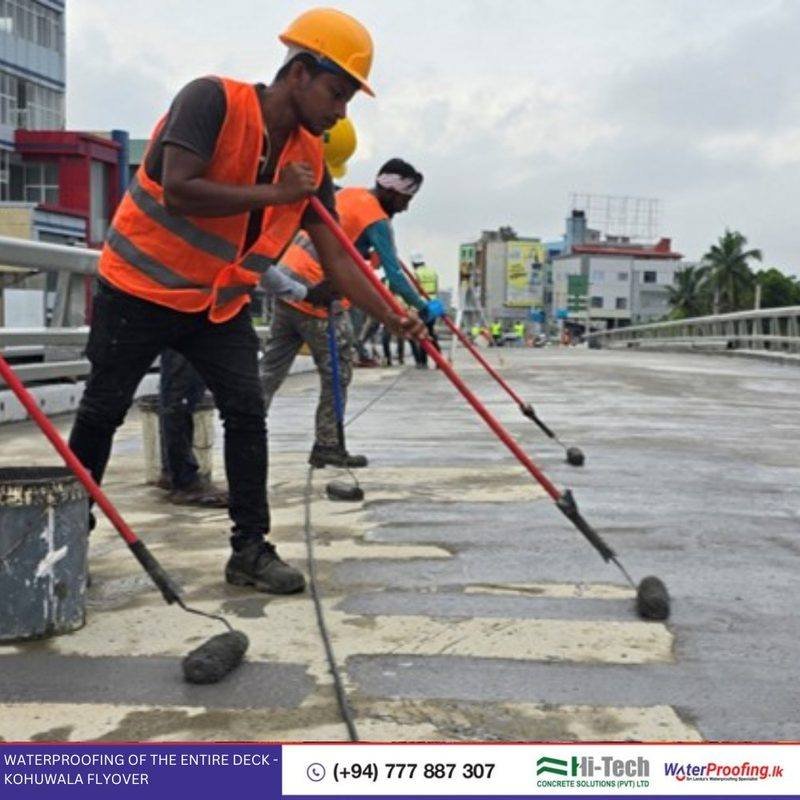
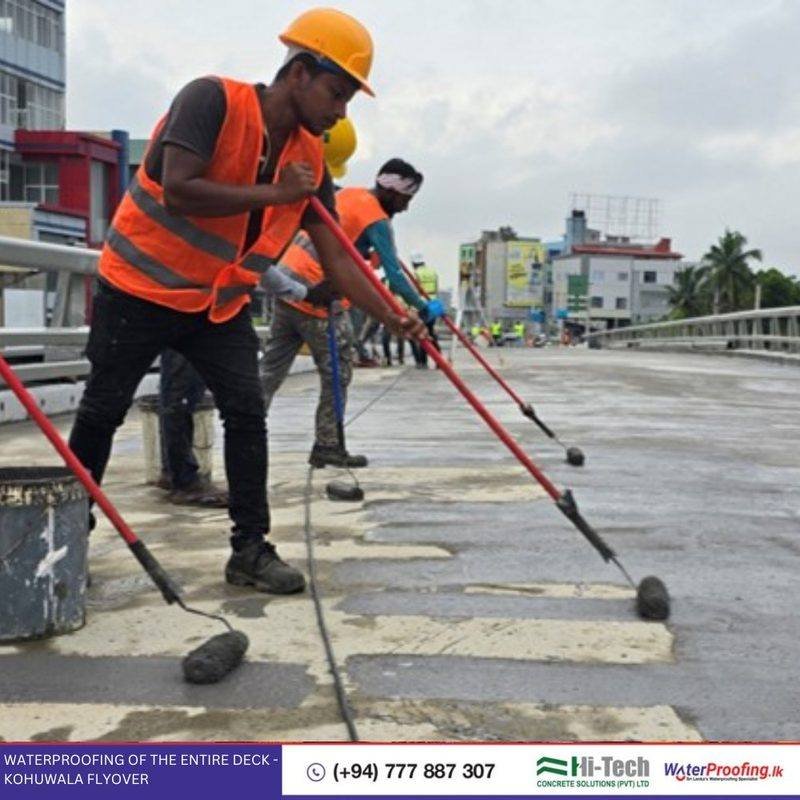
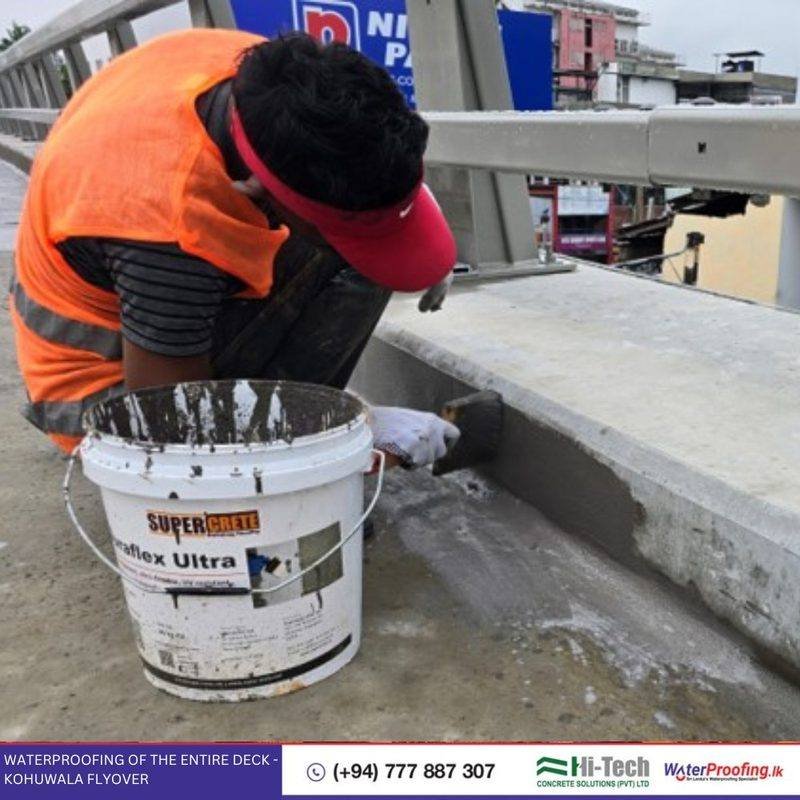
National infrastructure is a category of its own. Water ingress into a bridge deck or tunnel structure causes long-term structural deterioration that is extremely expensive to remediate. The Kohuwala Flyover in Colombo is one example where our team provided waterproofing as part of the construction programme.
Real Sri Lanka Projects — What We Did and Why
The best way to understand construction-stage waterproofing is through real examples. Here are three projects we completed in Sri Lanka:
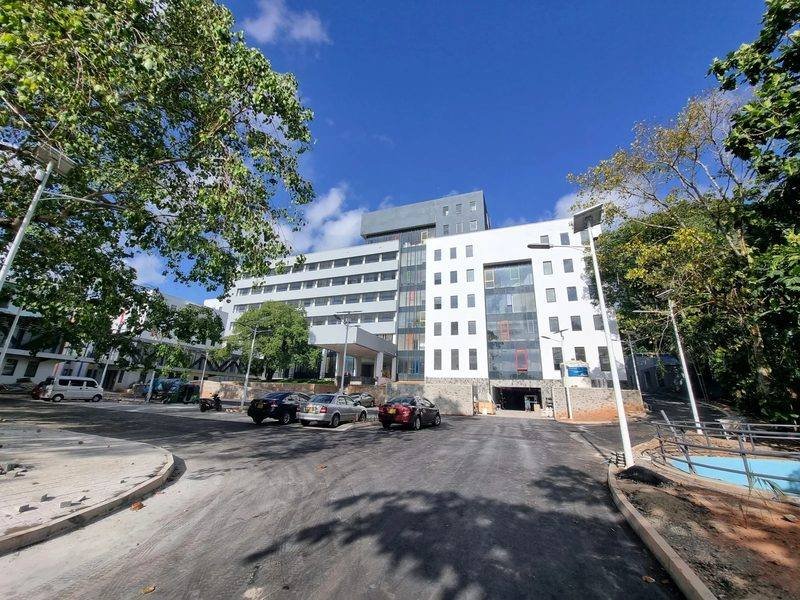
Maternity & Children's Hospital, Kalutara
Government hospital project. Waterproofing scope included roof slabs, wet areas, water tanks and drainage channels. Because this was a healthcare facility, the specification required a certified system with a documented warranty. We used Supercrete Duraflex Ultra for wet areas and roof slabs, and Supercrete Duraseal XP for water-retaining structures. The system was applied during construction before any floor screeds or ceiling finishes were installed.
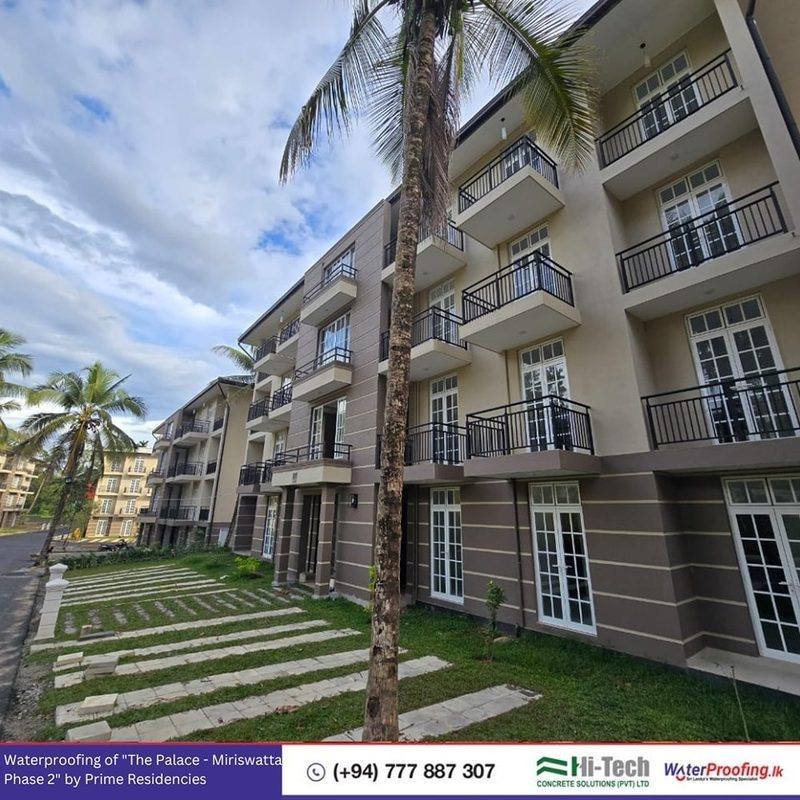
The Palace — Miriswatta Phase 2 (Prime Residencies)
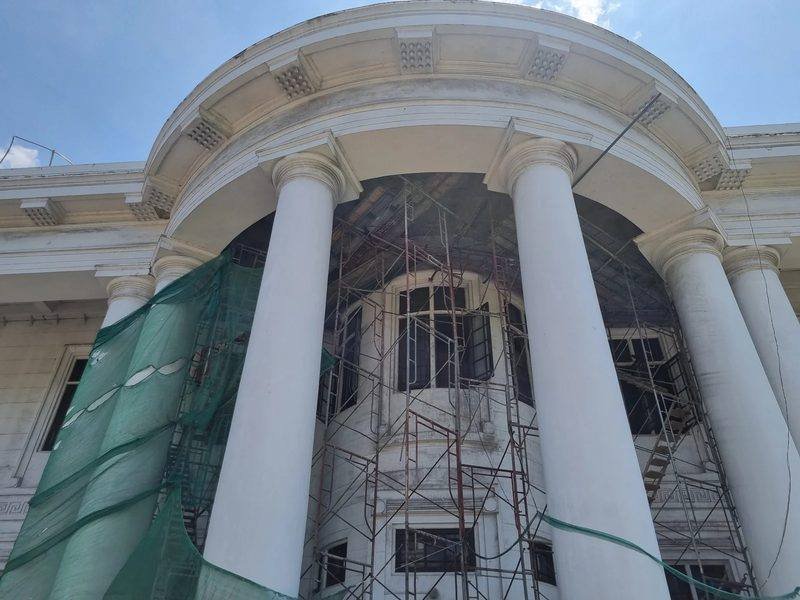
Luxury apartment complex. Waterproofing scope covered bathrooms across all units, balconies, the rooftop common areas, and the swimming pool. Because this was a premium development, the client required a 10-year written warranty — which we were able to provide through the certified Supercrete NZ system. Construction-stage application meant all systems were integrated before tiling and finishing, with no compromise on system integrity.
Kohuwala Flyover, Colombo
Road infrastructure project. Waterproofing of the entire bridge deck using Supercrete Duraflex Ultra applied by roller across the full deck area. Infrastructure waterproofing requires systems that can handle structural movement, thermal cycling, and traffic loading. The Supercrete system is used for these applications internationally and was specified for this project based on its performance characteristics.
Waterproofing Systems Used During Construction
Not all waterproofing systems are suited to construction-stage application. The right system depends on the substrate, the exposure conditions, the building type, and the performance specification required.
Flexible Cementitious Systems (2-Component Slurry)
Used for: Bathrooms, wet rooms, balconies, roof slabs, water tanks.
How it works: Cement powder component and liquid polymer component are mixed and applied by brush in two coats. The polymer provides elasticity — the system can bridge hairline cracks and accommodate minor structural movement.
Sri Lanka example: Supercrete Duraflex Ultra — winner of the Product Excellence Award at Architect Exhibition 2025.
Crystalline Waterproofing
Used for: Structural concrete, foundations, water-retaining structures, tunnels.
How it works: The system penetrates into the concrete and forms insoluble crystals within the concrete pores. It becomes part of the concrete structure permanently — and is self-healing if micro-cracks form later.
Sri Lanka example: Supercrete Duraseal XP.
Polyurethane Liquid Membrane
Used for: Exposed roofs, bridge decks, car park decks, areas requiring seamless coverage.
How it works: One-component liquid applied by brush or roller that cures to a seamless flexible rubber membrane. Excellent UV resistance and weathering performance.
Sri Lanka example: Supercrete Duraproof PU 550.
Cementitious Grouting for Joints and Penetrations
Used for: Construction joints, pipe penetrations, tie-hole repairs.
How it works: High-performance grout fills voids and joints that are natural weak points for water ingress. Applied to construction joints before they are covered by subsequent construction. See our Cementitious Grouting Service.
Common Mistakes Made During Construction
After hundreds of projects in Sri Lanka, these are the mistakes we see most often — and most of them are avoidable:
- No waterproofing in the specification — the Bill of Quantities does not include it. Contractors do not quote for it. It does not happen. This is the most common failure in lower-budget residential and commercial projects.
- Waterproofing specified but value-engineered out — the client or contractor cuts it from the budget to save money. It is always the wrong decision.
- Waterproofing applied at the wrong time — applied over a screed that has not cured, or to a substrate that is still wet. This causes adhesion failure.
- Wrong system for the application — using a wall paint-type coating where a structural waterproofing membrane was needed. Not all products called "waterproofing" are the same.
- No protection of the waterproofing after application — the membrane is applied correctly, but then foot traffic, screeding, or tiling damages it before it is protected. A damaged membrane is as good as no membrane.
- Pipe penetrations not treated — every pipe that passes through a waterproofed surface is a potential leak point. Each penetration needs a proper seal. This is often missed.
- No independent inspection or sign-off — nobody checks the work before it is covered. Defects only become apparent when water appears — too late.
- Using uncertified contractors — applying a Supercrete NZ system without a certified applicator voids the manufacturer warranty. The material cost might be saved but the guarantee is lost.
📜 Our recommendation: Include waterproofing in your specification from the design stage. Work with a certified applicator who can advise on the right system for each area. Get an inspection and sign-off before waterproofed areas are covered. Request a written warranty.
Long-Term Cost Savings and Asset Protection
Waterproofing is not a cost. It is an investment that protects a much larger investment — the building itself.
Consider the numbers. A 10,000 sqft commercial building with proper construction-stage waterproofing might cost Rs. 4–6 million for the waterproofing scope. The same building without waterproofing — one that develops leaks after three monsoon seasons — might face Rs. 15–25 million in remediation costs, plus tenant compensation, plus lost rental income during repairs, plus the reputational cost to the developer.
For developers and property owners, the return on investment calculation is straightforward:
- Lower lifecycle cost — a properly waterproofed building needs significantly less maintenance over its life
- Asset value protection — a building free from water damage commands a premium in the market
- Reduced liability — no tenant damage claims, no health and safety incidents from damp and mould
- Warranty coverage — a 10-year written warranty from a certified applicator provides comfort to developers, purchasers and financiers
- Specification compliance — government projects and institutional clients require certified waterproofing. Not having it disqualifies you from these contracts.
Frequently Asked Questions
Get a Commercial Waterproofing Consultation
If you are planning a commercial, residential or infrastructure project in Sri Lanka, we can provide a free site inspection, system recommendation and written specification for inclusion in your BOQ. Talk to our certified specialists.