Home About Us Services → Waterproofing Overview → Slab Waterproofing → Damp Proofing → Crack Injection → PU Grouting Injection → Epoxy Grouting → Cementitious Grouting → Tunneling → Design & Build → Concrete Repair → Protective Coatings → Industrial Flooring Products → Waterproofing → Grouts & Mortars → Tile Adhesives → Flooring → Micro-Cement → Sealants & Adhesives → Bonding Agents → Curing & Mould Release Projects Media Contact 🛡️ Free Inspection
Home Solutions Grouting & Injection Epoxy Grouting & Injection
🔵 Grouting & Injection

Epoxy Grouting
& Injection Services

High-quality epoxy injection and grouting solutions in Sri Lanka — restoring full structural integrity to cracked concrete beams, columns, slabs and walls. Stronger than the original concrete. Trusted by government, healthcare and infrastructure projects island-wide.

Structural Crack Repair Higher Tensile Strength Rigid Bond Non-Shrink
Epoxy Grouting Injection Sri Lanka
What is Epoxy Injection?

Epoxy Grouting & Injection —
Restoring Concrete to Full Strength

Discover high-quality epoxy injection and grouting solutions in Sri Lanka. Epoxy injection is the definitive method for structurally repairing dry cracks in concrete — bonding the crack faces together with an adhesive stronger than the original concrete to fully restore load-bearing capacity.

Unlike polyurethane (PU) injection which produces a flexible foam seal, epoxy resin cures to form an extremely strong, rigid bond between the two faces of a concrete crack. The tensile strength of cured epoxy resin — typically exceeding 50–70 MPa — is significantly higher than that of concrete itself. This means epoxy injection does not simply seal a crack but actually makes the repaired section structurally stronger than it was before cracking.

Epoxy grouting uses the same high-strength resin in a thicker formulation — suitable for filling wider gaps, voids, bolt holes and gaps beneath machinery base plates or precast elements where a non-shrink, high-strength structural fill is required. Both systems are applied using specialist injection pumps to ensure the resin penetrates fully through the depth of the element being repaired.

Two Distinct Applications

Epoxy Injection vs
Epoxy Grouting — What's the Difference?
💉
Epoxy Crack Injection

Low-viscosity epoxy resin injected under pressure into fine structural cracks — penetrating through the full depth of the concrete element to create a full-depth structural bond.

  • Crack widths from 0.1mm upward
  • Restores monolithic structural integrity
  • Low-viscosity for deep penetration
  • Cured strength > 50 MPa tensile
  • Best for beams, columns, slabs & walls
🔩
Epoxy Structural Grouting

Higher-viscosity epoxy grout for filling wider gaps, voids and spaces requiring a non-shrink, high-strength structural fill — including base plates, anchor bolts and honeycombed areas.

  • Wider gaps and voids (2mm–50mm+)
  • Machine base plate grouting
  • Anchor bolt fixing and embedment
  • Zero shrinkage — dimensionally stable
  • Chemical and solvent resistant
Epoxy Injection Structural Repair
The Science of Epoxy

Why Epoxy Makes Concrete
Stronger Than Before

The counterintuitive truth about epoxy injection is that it does not merely repair concrete to its original condition — it makes the repaired section significantly stronger. This is because epoxy resin has a tensile bond strength of 50–70 MPa, whereas structural concrete typically has a tensile strength of only 2–5 MPa.

When epoxy is injected into a crack and allowed to cure under pressure, it forms a molecular bond with the concrete on both crack faces — creating a composite material that is stronger in tension than the surrounding concrete. The repaired crack will not re-open at the same location; if the structure is overloaded, a new crack will form adjacent to the repair rather than through it.

  • Epoxy tensile strength: 50–70 MPa vs concrete tensile strength: 2–5 MPa
  • Full structural monolithic bond — not just a surface seal
  • Compressive strength exceeding 80 MPa — higher than most structural concrete grades
  • Bond strength to concrete substrate typically exceeds concrete's own cohesive strength
  • No shrinkage on curing — maintains full contact and bond across the entire crack face
  • Chemical resistance — unaffected by moisture, chlorides and most industrial chemicals
Material Performance
Epoxy Resin vs Concrete — Key Properties
70+
MPa Tensile Strength
vs concrete's 2–5 MPa
80+
MPa Compressive Strength
Higher than C40 concrete
0.1mm
Min Crack Width
Ultra-low viscosity systems
0%
Shrinkage on Cure
Full contact maintained
Applications

Where Epoxy Injection
& Grouting Is Used

🏗️
Structural Beams & Columns
Restoring full load-bearing capacity to cracked structural elements — beams, columns, piers and load-bearing walls.
🏢
Floor & Roof Slabs
Structural crack repair in flat slabs, suspended floors and roof decks — eliminating crack propagation and restoring integrity.
🌉
Bridges & Infrastructure
Full-depth crack repair in bridge decks, piers, abutments and flyover structures under traffic loading.
🏭
Machine Base Plates
High-strength, non-shrink epoxy grout beneath machinery, equipment base plates and precision-levelled structures.
Anchor Bolt Fixing
Epoxy-grouted anchor bolts and holding-down bolts for structural steel connections, equipment and railing posts.
🏛️
Heritage & Government
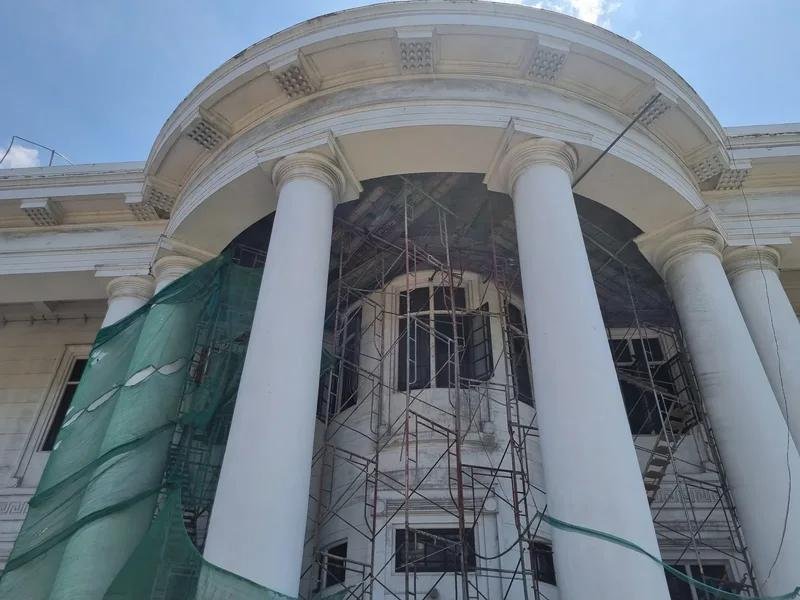
Sensitive structural repair of heritage and government buildings — including the CMC Building rehabilitation project.
🏥
Healthcare Facilities
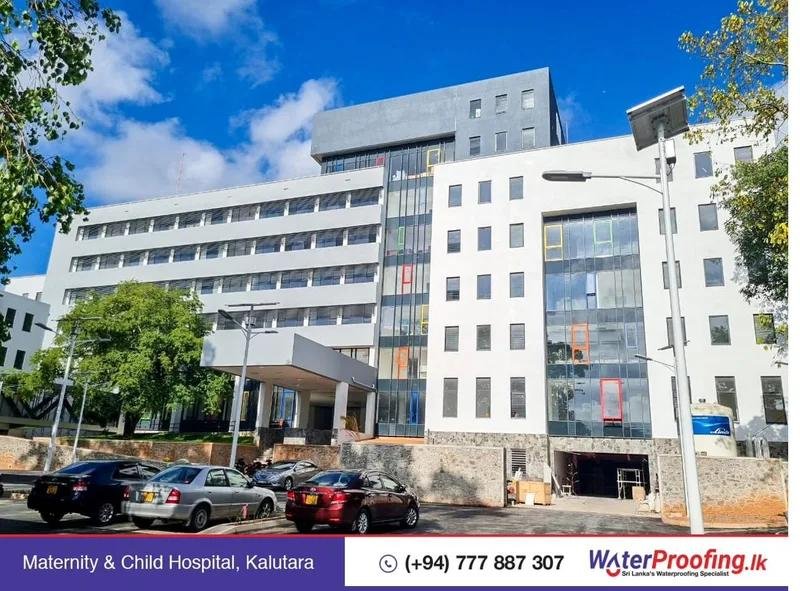
Structural crack repair in hospitals and healthcare buildings — carried out without disrupting operations or occupants.
🧱
Retaining Walls & Foundations
Dry structural cracks in retaining walls, raft foundations and pile caps — restoring monolithic structural performance.
🔧
Precast Element Joints
Filling and bonding of joints and gaps between precast concrete elements where structural continuity is required.
Application Process

The Epoxy Injection
Process — Step by Step
1
Crack Survey & Assessment
We map all cracks, measure their width and depth using feeler gauges, determine whether they are active or dormant, and confirm they are dry — epoxy injection requires a dry crack for full adhesion.
2
Surface Preparation & Port Placement
The crack surface is cleaned of dust and contaminants. Injection ports are installed at intervals of 150–300mm — spacing depends on crack width, depth and element thickness.
3
Surface Seal
An epoxy paste seal is applied over the crack surface between ports — preventing resin from escaping and ensuring full injection pressure is maintained within the crack.
4
Resin Injection
Two-component epoxy resin is mixed and injected under controlled pressure through each port in sequence, starting from the lowest point — until resin appears at the adjacent port, confirming full penetration.
5
Curing & Finishing
After full cure (typically 24–48 hours at ambient temperature), ports are removed, holes are filled with repair mortar and the surface seal is ground flush. A pull-off adhesion test confirms bond strength where required.
Epoxy Injection Process Sri Lanka
Resin Selection

Choosing the Right Epoxy
Viscosity for Your Crack

Epoxy resins are available in a range of viscosities — from ultra-low-viscosity water-thin systems for hairline cracks to high-viscosity pastes for wide gaps. Correct selection is critical for full crack penetration and performance.

Ultra-Low Viscosity
Crack width: 0.1 — 0.5mm

Water-thin resin for hairline cracks. Penetrates deeply through capillary action and injection pressure — ideal for fine cracks in beams and slabs.

Medium Viscosity
Crack width: 0.5 — 5mm

General-purpose injection resin for most structural crack repair applications — the most commonly used system for beams, columns and walls.

High Viscosity Paste
Gap width: 5mm — 50mm+

Thick epoxy grout for wide gaps, voids and base plate grouting. Non-shrink, zero slump — remains in position without formwork for most applications.

Epoxy vs PU

Epoxy or PU Injection —
Choosing the Right System

Criteria 🔵 Epoxy Injection 💉 PU Grouting
Primary purposeStructural restorationWater sealing
Crack condition requiredDryWet or active leak
Cured materialRigid — high strength bondFlexible foam
Structural load capacity✓ Fully restored✗ Not applicable
Movement joints✗ Not suitable✓ Ideal
Tensile bond strength50–70 MPaLow — foam bond
Min crack width0.1mm0.3mm+
Common Questions

Epoxy Grouting & Injection FAQs

Can epoxy injection repair a crack that has already been repaired before?
Yes — but the previous repair material must first be fully removed from the crack to expose clean concrete faces. Epoxy cannot bond to PU foam, surface mortars or other materials that may be partially filling the crack. Our team will assess the condition of any previous repair and remove it where necessary before injection proceeds.
How do I know if my crack needs epoxy or PU injection?
The key question is whether the crack is dry or wet. If the crack is actively leaking or damp, PU grouting is the correct choice — epoxy will not bond properly to a wet surface. If the crack is dry and structural restoration is required — particularly in load-bearing beams, columns or slabs — epoxy injection is the right system. Our site assessment will confirm this for your specific situation.
Will the epoxy-repaired crack be visible after completion?
After injection and curing, the port holes are filled with repair mortar and the surface seal is ground flush. The repaired crack will be visible as a thin line at the surface — it cannot be made completely invisible without resurfacing the entire element. Where appearance is critical, a skim coat of repair mortar or protective coating can be applied over the repaired area to minimise visual contrast.
How long does epoxy injection take to cure?
Standard two-component epoxy resin systems reach handling strength within 24 hours and full cure strength within 7 days at normal ambient temperatures. In Sri Lanka's warm climate (typically 28–35°C), curing proceeds faster — handling strength is often achieved within 12–16 hours. Fast-cure formulations are available where rapid return to service is required.

Is Your Concrete Structurally Cracked?

Our certified specialist will assess your cracks and specify the right injection system — free site visit, no obligation.